Air Fryer vs Microwave UK: Which One Should You Actually Buy?
Both appliances sit on millions of British kitchen countertops, yet they solve fundamentally different problems. If you're trying to decide which one to buy first — or whether you even need both — the answer depends almost entirely on how you cook, not which gadget is trendier right now.
What Each Appliance Actually Does
A microwave heats food by agitating water molecules with electromagnetic radiation. It's fast, it's consistent, and it doesn't care whether your food is frozen solid or just needs warming through. The catch: it produces steam internally, which means anything you wanted crispy comes out soft.
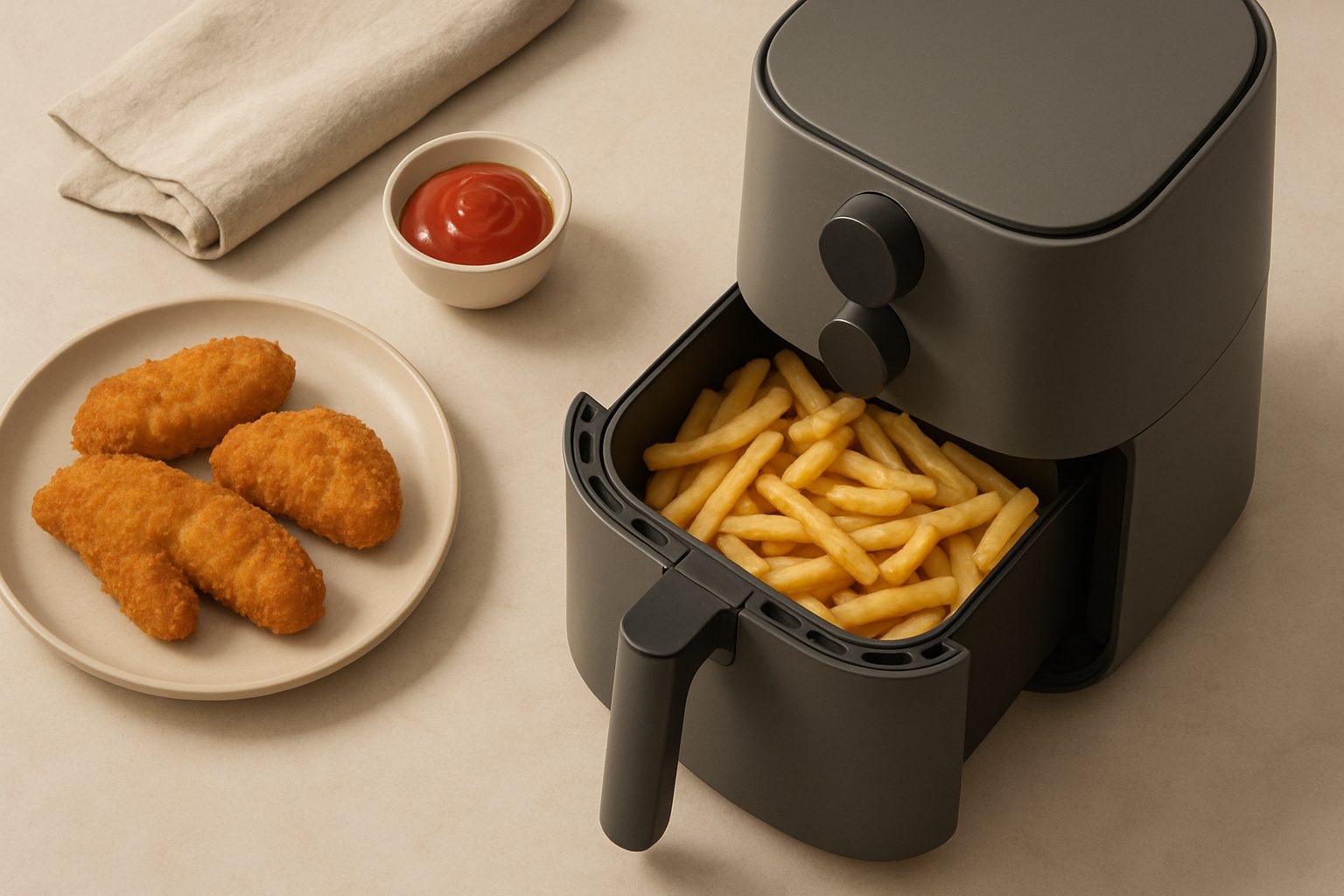
An air fryer is essentially a compact convection oven. A powerful fan circulates hot air at high speed around the food, producing the kind of dry, browning heat that creates crunch. It's slower than a microwave but dramatically faster than a full-sized oven — and it handles the textures a microwave simply cannot.
Understanding this distinction saves you from disappointment whichever you choose.
Speed: Where the Microwave Still Wins
For pure reheating speed, the microwave is unbeatable. A bowl of leftover soup takes 2–3 minutes. A plate of pasta is ready in under four. Defrosting a chicken breast from frozen takes perhaps ten minutes with no preheating required.
Air fryers need 3–5 minutes just to preheat, and most cooking tasks run 10–25 minutes. For someone who eats lunch at their desk and needs food now, that gap matters.
If speed is your primary concern — think busy households, office workers, people who batch-cook and reheat — the microwave is the more practical daily tool.
Food Quality: Where the Air Fryer Pulls Ahead
This is where context matters enormously. Microwaved chips are limp and slightly rubbery. Air-fried chips are genuinely crisp on the outside, fluffy within — results that a full-sized oven struggles to match without 30+ minutes of cooking time.
The air fryer excels at:
- Frozen foods — chips, onion rings, fish fingers, spring rolls come out as intended
- Reheating takeaway — pizza stays crisp rather than going soggy
- Proteins — chicken thighs, sausages, salmon fillets get a proper sear
- Vegetables — broccoli, peppers, and courgette roast rather than steam
- Baked goods — some air fryers handle small cakes, muffins, and even bread rolls
The microwave, by contrast, struggles with anything that benefits from dry heat. It excels at:
- Reheating saucy dishes, soups, and stews
- Steaming vegetables quickly
- Defrosting without cooking
- Cooking rice and oats
- Melting butter or chocolate without a bain-marie
Neither appliance is categorically superior. They're tools for different jobs.
Energy Use: The Numbers UK Buyers Should Know
With energy bills still a live concern for most UK households, running costs matter. A standard 800W microwave used for 10 minutes costs roughly 2–3p per use at current UK rates. An air fryer at 1,500–2,000W running for 20 minutes costs around 10–14p per session.
However, the comparison shifts when you consider the alternative. If you're using an air fryer instead of a full-sized oven (2,000–3,500W for 45–60 minutes), you're saving money. If you're using it instead of a microwave for reheating, you're spending more.
The honest summary: microwaves are cheaper to run for their primary use case; air fryers are cheaper than ovens for theirs.
Versatility and Kitchen Reality
Modern air fryers have expanded well beyond chips. Larger basket models (5L+) can roast a whole chicken, bake a small loaf, or dehydrate fruit. Dual-drawer models from brands like Ninja let you cook two foods at different temperatures simultaneously, which genuinely changes how you plan a meal.
Microwaves have also evolved — combination microwaves (combi microwaves) add grill and convection functions, blurring the line between the two categories. A good combi microwave can brown and crisp food, though it typically takes longer than a dedicated air fryer and cleans up less easily.
If kitchen space is tight — a flat, a student kitchen, a narrow galley — this is the deciding factor. A microwave sits neatly under eye level and handles a wider range of textures if you choose a combi model. An air fryer is bulkier but replaces the oven for most everyday cooking.
Cleaning and Maintenance
Air fryer baskets are removable and usually dishwasher safe, but grease accumulates quickly and the interior walls need regular attention to prevent smoking. A household cooking proteins three or four times a week will clean the basket every other day.
Microwaves are easier to keep clean on a daily basis — a wipe-down after splashes — but a neglected microwave with baked-on splatter is tedious to restore.
Neither is a maintenance nightmare, but frequent air fryer users should factor cleaning time into their decision.
Who Should Buy Which
Buy a microwave if:
- Reheating and defrosting cover most of your cooking needs
- Speed is the priority
- You already have an oven for roasting and baking
- Kitchen space or budget is very limited
- You live alone and eat simple, quick meals
Buy an air fryer if:
- You cook frozen foods regularly and want proper texture
- You want to reduce oven use (and energy bills)
- You eat a lot of proteins, roasted veg, or anything that benefits from dry heat
- You cook for two or more people most nights
- You want something that genuinely replaces the oven for weekday meals
Buy both if:
- You cook varied meals daily and want the fastest, best-quality result for each
- You have the counter space and a budget of £100–£200 total
- You batch-cook and reheat frequently and cook fresh most evenings
For most UK households that cook regularly, an air fryer and a basic microwave together cover almost everything a full kitchen needs — without ever turning on the main oven from Monday to Friday.
The Practical Verdict
There's no universally correct answer here, because these appliances aren't direct competitors. A microwave is a reheating tool that occasionally cooks; an air fryer is a cooking tool that occasionally reheats. If you can only have one and you cook from scratch most days, the air fryer is more capable. If you mostly reheat and defrost, the microwave wins on speed and cost.
The good news: decent examples of both are available for under £60 in the UK, so the question of which to prioritise rarely means a major financial commitment either way.
More options
- Ninja Dual Zone Air Fryer AF300UK (Amazon UK)
- Cosori Pro Gen 2 Air Fryer (Amazon UK)
- Tower Vortx Eco Air Fryer (Amazon UK)
- Proscenic T31 Budget Air Fryer (Amazon UK)
- Air Fryer Silicone Liners & Accessories Bundle (Amazon UK)